Satellites Now ‘Photobombing’ Space Telescopes, NASA Study Warns: The Growing Challenge in Astronomy
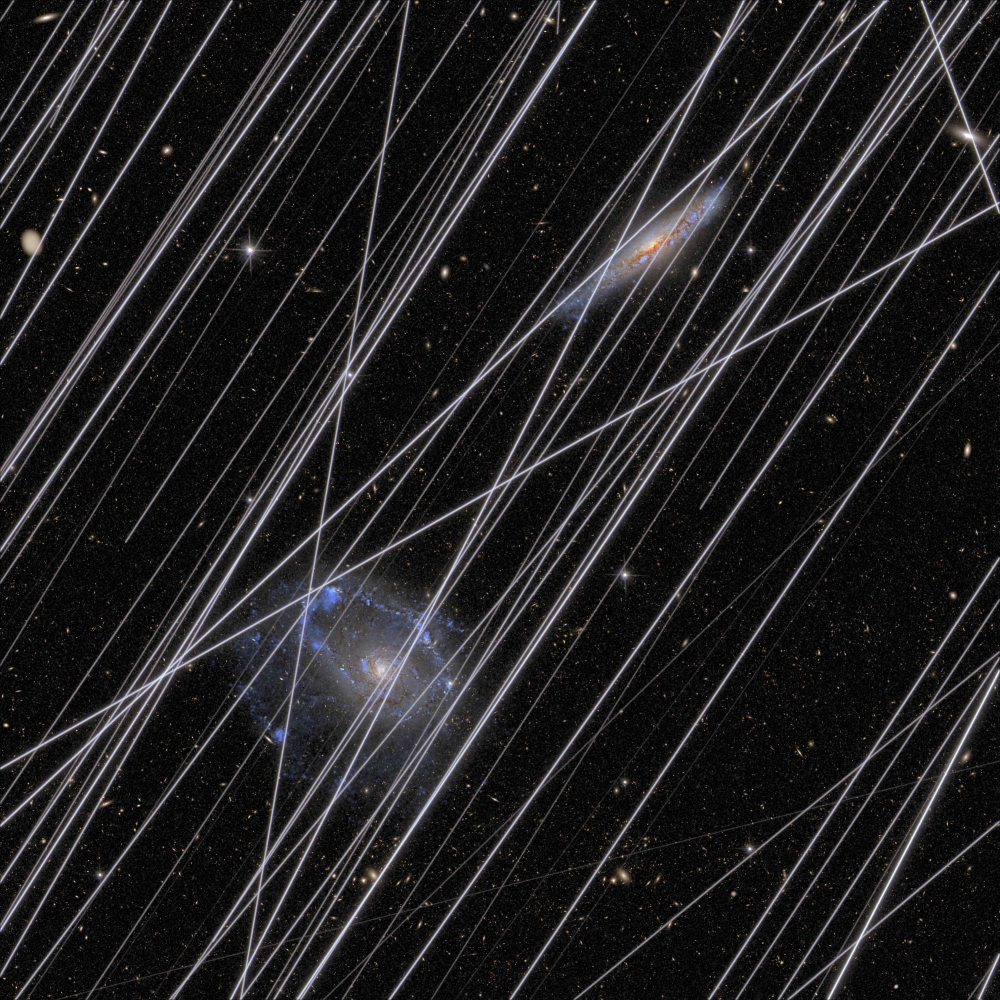
In recent years, the night sky’s canvas has transformed dramatically—not just with distant stars and galaxies, but with an ever-growing fleet of human-made satellites. While these technological marvels enable crucial communication, navigation, and Earth-monitoring services, their rapid multiplication is casting an unanticipated shadow on one of humanity’s greatest scientific endeavors: space observation. NASA’s latest study issues a stark warning—satellites are increasingly “photobombing” space telescopes, threatening the clarity and effectiveness of our cosmic explorations.
The Satellite Surge: A Game-Changer in Low-Earth Orbit
Historically, the heavens above were pristine; space telescopes could gaze uninterrupted into the depths of space, capturing images untainted by earthly interference. However, the landscape of low-Earth orbit has changed exponentially. The proliferation of satellite constellations, particularly driven by mega-constellation projects such as SpaceX's Starlink, OneWeb, and Amazon’s Kuiper, has introduced tens of thousands of new objects orbiting within a few hundred miles of planet Earth.
With each passing month, more satellites are launched to deliver broadband internet across the globe, improve weather forecasting, and enable advanced military communications. While these missions bring substantial benefits, the sheer number of satellites means that they are often caught in the field of view of telescopes—both ground-based and space-borne—appearing as bright streaks of light that “photobomb” observations.
How Satellites Interfere with Space Telescopes
Space telescopes like Hubble, and soon the James Webb Space Telescope, rely on long-exposure imaging to capture faint light from distant cosmic phenomena billions of light-years away. When a satellite crosses the telescope’s line of sight during an exposure, its reflected sunlight creates bright trails that mar the image and obscure vital astronomical data.
This interference affects various types of observations:
- Optical Astronomy: Satellites reflect sunlight and appear as glowing trails, which can confuse data analysis and hide dim celestial objects.
- Radio Astronomy: Satellite signals cause radio frequency interference, complicating the detection of faint radio emissions from stars and galaxies.
- Infrared and Ultraviolet Observations: Though less affected than visible light, these wavelengths are still vulnerable to certain satellite materials and emissions.
This growing problem is not limited to a few isolated events—recent NASA research reveals that, especially around twilight hours when satellites reflect sunlight most strongly, more than half of wide-field imaging sessions are corrupted by satellite trails.
Why This Matters: The Impact on Astronomy and Science
Astronomy depends on clean data to understand the universe’s origins, the nature of dark matter and energy, and the conditions for life beyond Earth. Satellite interference undermines this critical research, leading to wasted telescope time, increased costs for data correction, and potentially missed discoveries.
Ground-based observatories located in remote or protected zones are also affected, as satellites disregard geographic boundaries. This global challenge threatens the work of professional astronomers and citizen scientists alike who study the cosmos.
Steps Being Taken to Mitigate the Problem
Recognizing the urgency, NASA, international space agencies, and private sector companies are collaborating on potential solutions:
- Satellite Design Innovations: Companies are exploring ways to reduce satellite brightness, such as dark coatings, sunshields, and orientation adjustments to minimize reflected sunlight.
- Orbital Management: Regulating satellite altitudes and orbits to avoid prime observing zones can reduce congestion and interference with sensitive observations.
- Improved Data Processing: Astronomy teams are developing sophisticated algorithms to detect and remove satellite trails from images without losing valuable data.
- Global Policy Frameworks: There is a growing call for international guidelines to balance the benefits of satellite deployments with the preservation of the night sky for science.
Looking Ahead: Balancing Progress and Preservation
The tension between technological advancement and environmental preservation is not new, but it is especially poignant in space exploration. Satellites undoubtedly play an indispensable role in modern life—enhancing communication, weather forecasting, and national security. Yet, this new frontier requires a thoughtful approach to protect the integrity of our cosmic observations.
As NASA’s study emphatically points out, the “photobombing” phenomenon is a call to action for scientists, policymakers, and industry leaders. By innovating satellite design, enforcing smart regulations, and fostering international cooperation, the celestial stage can remain accessible and unobstructed for generations of astronomers to come.
Safeguarding the Window to the Universe
Satellites have become vital instruments of progress, but their unintended consequences for space telescopes highlight the complex challenges of space stewardship. NASA’s warning about satellite interference is a wake-up call to balance our technological ambitions with the preservation of scientific discovery.
Protecting our view of the universe is not just about safeguarding equipment—it’s about preserving humanity’s ability to explore, understand, and marvel at the cosmos. Through collaborative innovation and responsible governance, we can ensure that the night sky remains a source of inspiration, knowledge, and wonder—untainted by the bright, fleeting traces of satellites that seek to serve us here on Earth.
Satellites now ‘photobombing’ space telescopes, Nasa study warns
Published on December 5, 2025 by Uchenna Onyeji
Share
About the Author
Uchenna Onyeji is a technology researcher, developer, and writer with a strong focus on artificial intelligence, web development, and emerging digital innovations. He is committed to simplifying complex concepts and making technology accessible to a wider audience through clear, insightful, and engaging content.
With a background in building practical solutions—from AI-powered applications to user-friendly digital platforms—Uchenna combines technical expertise with a passion for continuous learning. His blog serves as a space to share knowledge, explore new ideas, and inspire readers to embrace the possibilities of technology in shaping the future.
Outside of his work, he actively explores history, critical thinking, and creative problem-solving, all of which enrich his perspective and writing style.